


Artist As An Entrepreneur
Artists As An Entrepreneur
You are an artist and you are trying to make a living with your talent, but no one takes you seriously.How can you convince everyone that you are a serious artist? You can accomplish this by presenting yourself in a professional manner, and by objectifying yourself to your potential "clients". Yes, you are trying to secure clients when you are trying to convince someone to allow you to showcase your talent, and your talent is the product which you are trying to sell. Most artists have to make "cold calls" when trying to gain new clients, and you must have a professional looking proposal to present when seeking out these potential clients. What should be in your proposal?
One: Professional Head Shots.
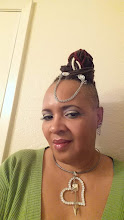
As an artist your main product is You. If you were selling computers, you would provide a picture of the computer, as well as, a description of the computer and what it could do. You would not send a Polaroid of the computer, so you shouldn't send a Polaroid of yourself. Hire a professional photographer to take several different head shots so that you can adjust your proposal based on the purpose of the proposal. You need a "corporate" image shot for the times when you are trying to gain print clients, such as magazines and newspaper editors. You need a "fun" shot for your book cover if you are an author or CD cover if you're a singer or musician. You also, need a "sexy" shot for purposes of advertising on posters or television.
Two: Professional Bio.
Again, when making a "cold call", you need to present your potential clients with a description of the product you are selling - You! Using the example given above, you would not provide a description of the computer handwritten on notebook paper or with spelling and grammatical errors. Misspelled words and missing punctuation may be necessary to get your point across if you are an author; however, it appears unprofessional when present in your bio. Your bio is often times the first look a potential client has of our product, You. Your bio should appear professionally written and should provide a complete description of you, your talent, and how long you have been pursuing your talent professionally. However, you should treat your bio the same as you do your resume and limit it to no more than two (2) pages.
Three: Press Kit
Your press kit serves as your business proposal to your potential clients. Your press kit should be just that, a kit. It should be in a professional looking "case which, in most cases, will be a folder of some type. It should include a head shot, your bio, a few professionally written press releases announcing a live performance or the release of your "product" (CD, Book, Painting, Sculpture, etc.), a "sample" of your work (CD, pictures of artwork, a portion of your book/screenplay/etc) and some actual newspaper/magazine "clippings". You can use resume folders that contain pockets, as well as a built in business card slot in which to place all of these items. You can also use report covers which are typically made of plastic, and contain clear sleeves in which you place your head shot, bio, releases, and clippings.
You are bound to be viewed as a professional artist if you employ the three techniques above before venturing out into the entertainment business, and seeking potential clients.
Note1: The material presented above was originally composed in 2005 before everything became electronic, however, that doesn't mean that it is outdated or obsolete. It just means there are alternative ways to distribute your information which I will outline in notes below.
Polaroid was a type of picture that was popular back in the late 80's early 90's as the picture could be viewed instantly, and it was rather bulky and very unprofessional looking.
Note2: Current day press kits are referred to as EPKs - Electronic Press Kit, however, these kits should contain the same information listed above. If you have had a story printed by the media, you should ask the reporter/journalist for an electronic copy of the story that appeared in their publication so that you can still include "clippings" in your kit.
While it may be tempting to include as much as you possibly can in an EPK, keep in mind that large amounts of data travel slowly over the internet and if too large won't arrive at their designated destination. So limit your EPK to what you would include in an actual "hard copy" press kit.
Note3: It can be beneficial to have two (2) bios prepared and ready to distribute at all times. The short bio should be no more than two (2) paragraphs, 500 words or less, and should include awards/accomplishments/etc.. This bio would be used to introduce you at seminars, conferences, etc., and also for promotional publication for example on a web site or electronic announcement for an event at which you will appear. The long bio is what I described above, and would be sent to reporters/journalist prior to being interviewed so that they have a base from which to formulate questions to ask you during the interview.
Hope you found the information in this post (and the whole blog) helpful as this is the last entry in this blog! Yes, it's over! I've given you all the information I can under this title! However, don't fret, I will begin a new blog later this week or early next week for those seeking careers behind the scenes in the entertainment industry. And if you're an author, you can check out my other blog "So you want to be an author" at GStylfire.blogspot.com.
It's been fun chatting with you!
You are an artist and you are trying to make a living with your talent, but no one takes you seriously.How can you convince everyone that you are a serious artist? You can accomplish this by presenting yourself in a professional manner, and by objectifying yourself to your potential "clients". Yes, you are trying to secure clients when you are trying to convince someone to allow you to showcase your talent, and your talent is the product which you are trying to sell. Most artists have to make "cold calls" when trying to gain new clients, and you must have a professional looking proposal to present when seeking out these potential clients. What should be in your proposal?
One: Professional Head Shots.
As an artist your main product is You. If you were selling computers, you would provide a picture of the computer, as well as, a description of the computer and what it could do. You would not send a Polaroid of the computer, so you shouldn't send a Polaroid of yourself. Hire a professional photographer to take several different head shots so that you can adjust your proposal based on the purpose of the proposal. You need a "corporate" image shot for the times when you are trying to gain print clients, such as magazines and newspaper editors. You need a "fun" shot for your book cover if you are an author or CD cover if you're a singer or musician. You also, need a "sexy" shot for purposes of advertising on posters or television.
Two: Professional Bio.
Again, when making a "cold call", you need to present your potential clients with a description of the product you are selling - You! Using the example given above, you would not provide a description of the computer handwritten on notebook paper or with spelling and grammatical errors. Misspelled words and missing punctuation may be necessary to get your point across if you are an author; however, it appears unprofessional when present in your bio. Your bio is often times the first look a potential client has of our product, You. Your bio should appear professionally written and should provide a complete description of you, your talent, and how long you have been pursuing your talent professionally. However, you should treat your bio the same as you do your resume and limit it to no more than two (2) pages.
Three: Press Kit
Your press kit serves as your business proposal to your potential clients. Your press kit should be just that, a kit. It should be in a professional looking "case which, in most cases, will be a folder of some type. It should include a head shot, your bio, a few professionally written press releases announcing a live performance or the release of your "product" (CD, Book, Painting, Sculpture, etc.), a "sample" of your work (CD, pictures of artwork, a portion of your book/screenplay/etc) and some actual newspaper/magazine "clippings". You can use resume folders that contain pockets, as well as a built in business card slot in which to place all of these items. You can also use report covers which are typically made of plastic, and contain clear sleeves in which you place your head shot, bio, releases, and clippings.
You are bound to be viewed as a professional artist if you employ the three techniques above before venturing out into the entertainment business, and seeking potential clients.
Note1: The material presented above was originally composed in 2005 before everything became electronic, however, that doesn't mean that it is outdated or obsolete. It just means there are alternative ways to distribute your information which I will outline in notes below.
Polaroid was a type of picture that was popular back in the late 80's early 90's as the picture could be viewed instantly, and it was rather bulky and very unprofessional looking.
Note2: Current day press kits are referred to as EPKs - Electronic Press Kit, however, these kits should contain the same information listed above. If you have had a story printed by the media, you should ask the reporter/journalist for an electronic copy of the story that appeared in their publication so that you can still include "clippings" in your kit.
While it may be tempting to include as much as you possibly can in an EPK, keep in mind that large amounts of data travel slowly over the internet and if too large won't arrive at their designated destination. So limit your EPK to what you would include in an actual "hard copy" press kit.
Note3: It can be beneficial to have two (2) bios prepared and ready to distribute at all times. The short bio should be no more than two (2) paragraphs, 500 words or less, and should include awards/accomplishments/etc.. This bio would be used to introduce you at seminars, conferences, etc., and also for promotional publication for example on a web site or electronic announcement for an event at which you will appear. The long bio is what I described above, and would be sent to reporters/journalist prior to being interviewed so that they have a base from which to formulate questions to ask you during the interview.
Hope you found the information in this post (and the whole blog) helpful as this is the last entry in this blog! Yes, it's over! I've given you all the information I can under this title! However, don't fret, I will begin a new blog later this week or early next week for those seeking careers behind the scenes in the entertainment industry. And if you're an author, you can check out my other blog "So you want to be an author" at GStylfire.blogspot.com.
It's been fun chatting with you!

Labels: artist, Artpreneurs, bio, Business, Cleveland, G Styl Productions Inc, head shot, image, Marketing, press kit, promotions, ReGina Crawford
posted by ReGina Crawford | 28.1.14
|
0 comments

